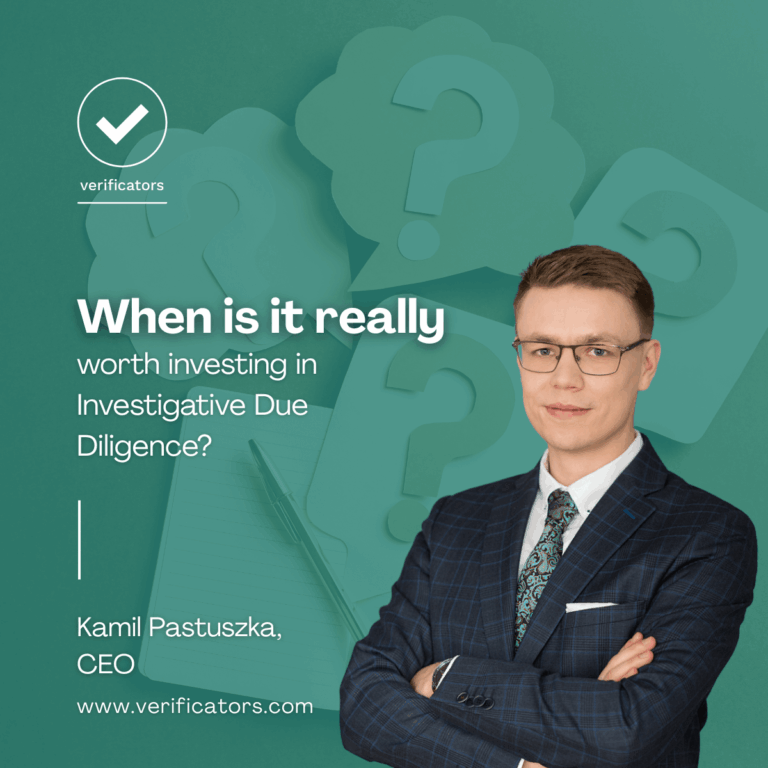
Not every transaction requires detailed due diligence. But there are situations where the lack of such analysis can cost more than the entire investment.
- High transaction values
The more capital at stake, the greater the risk – and the more important it is to mitigate it.
There is no room for guesswork or ‘trust on your word’ here.
- High-risk industries
Finance, real estate, commodities and energy are markets where reputation and transparency are of paramount importance.
Unclear connections or hidden conflicts of interest can destroy the value of a transaction overnight.
- Foreign entities or entities with an unclear background
International transactions, companies from tax havens, complex ownership structures – all of these require an additional layer of verification.
Often, only specialist sources and local contacts can verify who we are really dealing with.
The rule is simple: the more unknowns there are, the more sense Investigative Due Diligence makes.
This concludes the series. If you would like to return to previous posts or discuss a specific case, please feel free to contact me.
Author: CEO Kamil Pastuszka